

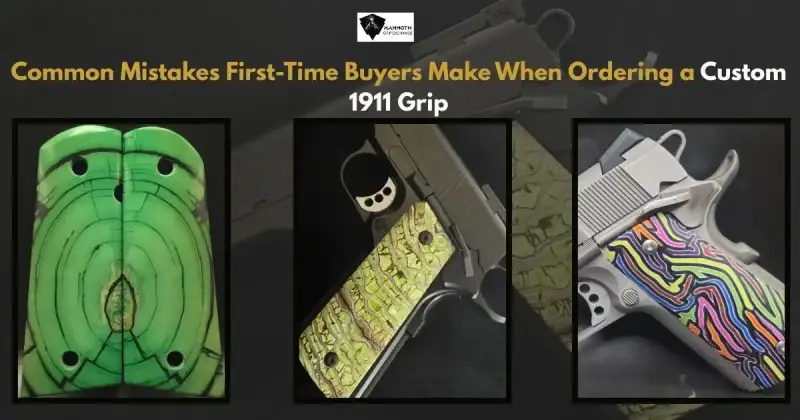
Ordering custom 1911 gun grips is an exciting step for any firearm owner. Whether you’re upgrading a cherished pistol, building a showpiece, or investing in a future heirloom, custom grips transform a 1911 from a standard firearm into a personal statement. However, first-time buyers often make avoidable mistakes that affect comfort, performance, and long-term value. Understanding these pitfalls before placing your order ensures your grips enhance both form and function.
Top 7 Mistakes First-Time Buyers Make When Ordering Custom 1911 Gun Grips
1. Choosing Material Based on Looks Alone
One of the most common mistakes is selecting a 1911 grip material purely for appearance. Exotic materials like mammoth ivory, mammoth molar, dinosaur bone, antler, or rare woods are visually stunning, but each behaves differently in hand.
Weight, density, temperature sensitivity, and texture all influence recoil control and shooting comfort. For example, smooth mammoth ivory offers a refined, classic feel but may not provide the same traction as crosscut mammoth molar or textured carbon fiber. The best choice balances aesthetics with how and where you actually use your firearm—range shooting, collection display, or occasional carry.
2. Ignoring 1911 Model Compatibility
Not all 1911s are the same, and assuming “one size fits all” can lead to costly errors. Frame size (full-size, Commander, or Officer), grip screw spacing, magwell compatibility, and ambidextrous safety cutouts all matter.
First-time buyers often order beautiful custom grips only to discover they don’t seat properly or interfere with controls. Verifying your exact 1911 specifications before ordering is essential to achieving a precise, seamless fit.
3. Overlooking Grip Thickness and Ergonomics
Grip thickness directly affects shooting comfort and control, yet it’s frequently overlooked. Standard grips may feel too bulky for smaller hands, while slim grips can reduce recoil absorption for others.
Ergonomics influence trigger reach, wrist alignment, and fatigue during extended shooting sessions. A custom grip should feel like a natural extension of your hand—not something you have to adjust to with every shot.
4. Choosing the Wrong Grip Texture
Texture is more than a visual detail—it’s a performance feature. Smooth grips emphasize elegance and heritage, while checkered, crosscut, or carved textures provide added traction.
Many first-time buyers underestimate how texture affects control under recoil or in warm conditions. If your 1911 is primarily a range or display firearm, smoother finishes may work beautifully. For frequent shooting, a more tactile surface can dramatically improve handling confidence.
5. Expecting Handmade Grips to Look “Perfect”
Handcrafted grips are not CNC-machined, mass-produced parts—and that’s precisely their value. Natural materials, especially fossil-based ones, carry organic variations in grain, color, and pattern.
First-time buyers sometimes mistake these natural characteristics for flaws. In reality, they are proof of authenticity and craftsmanship. Each set is truly one of a kind, shaped by history and refined by hand, not duplicated by machines.
6. Treating Custom Grips as Accessories Instead of Heirlooms
Custom 1911 grips are not disposable upgrades. When crafted from rare or historically significant materials, they become heirloom pieces meant to outlast trends and generations.
Buyers who focus solely on short-term aesthetics often miss the deeper value—storytelling, rarity, and legacy. Viewing your grips as part of your firearm’s long-term identity leads to better material choices and more meaningful customization.
7. Skipping Personalization Opportunities
Engraving, scrimshaw, and custom artwork are often afterthoughts for first-time buyers, yet they’re what truly elevate custom grips into functional art.
Whether it’s intricate scrimshaw by a master artist, laser engraving, or symbolic imagery, personalization turns a grip into a deeply personal object. This is especially important for commemorative builds, meaningful gifts, or collector-grade firearms.
How to Order Custom 1911 Grips the Right Way
Avoiding these mistakes comes down to preparation and communication. Before ordering, confirm your firearm’s specifications, think carefully about how you’ll use the pistol, and choose materials that balance beauty with performance. Ask about warp resistance, finishing processes, lead times, and guarantees. A reputable artisan will guide you through each decision rather than rushing the sale.
Conclusion
Ordering custom 1911 gun grips is an investment in craftsmanship, heritage, and personal expression. By avoiding these common first-time mistakes, you ensure your grips not only look exceptional but also perform flawlessly and stand the test of time. When done right, custom grips don’t just complete a firearm—they define it.
Frequently Asked Questions About the Common Mistakes First-Time Buyers Make
Are mammoth ivory grips legal in the USA?
Yes. Fossil mammoth ivory is legal under U.S. law, unlike modern elephant ivory.
Do custom grips improve shooting performance?
Properly fitted grips with the right thickness and texture can significantly improve control and comfort.
Are fossil-based grips durable?
When properly stabilized and finished, they are highly durable and resistant to warping.
Are handmade grips better than CNC grips?
Handmade grips offer uniqueness, craftsmanship, and character that CNC grips cannot replicate.
Can custom grips be given as gifts?
Absolutely. Personalized grips make meaningful, heirloom-quality gifts.
Add comment
Comments