

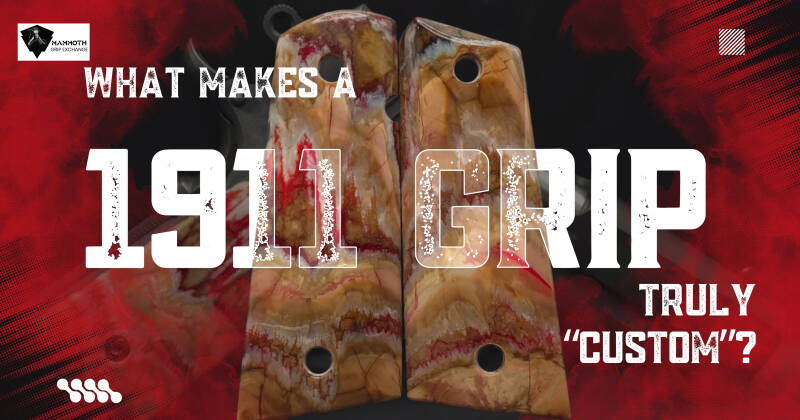
The word custom gets used loosely in the firearm industry. Scroll through enough product listings, and you’ll see it applied to anything from a different color variation to a lightly modified CNC pattern. But if you’re a serious 1911 collector, you already know there’s a difference between “customized” and truly custom.
A truly custom 1911 grip is not just a replacement part. It is a handcrafted extension of the firearm — and, in many cases, an extension of the owner.
So what separates a mass-produced aftermarket grip from an heirloom-grade, artisan-made masterpiece?
The Difference Between Aftermarket and Truly Custom
Most aftermarket 1911 grips are CNC-machined in batches. They’re consistent, efficient, and widely available. There’s nothing inherently wrong with that — but they are still products of production systems.
A truly custom grip, by contrast, is individually crafted. It is shaped, contoured, fitted, and finished by hand. No two sets are identical. Subtle variations in grain, density, and artistry make each piece one of one.
For affluent collectors and high-end firearm enthusiasts, that distinction matters. Because when you invest in a premium 1911, you don’t want a part that feels interchangeable — you want something personal.
It Starts with Rare and Historic Materials
Material selection is where real customization begins.
Mass-produced grips typically use stabilized wood, G10, or synthetic composites. True custom grips often incorporate materials that carry historical weight and natural uniqueness:
- Woolly Mammoth ivory
- Mammoth molar
- Dinosaur bone
- Walrus tusk
- Exotic hardwoods
- Meteorite inlays
When I hold a grip crafted from ancient mammoth ivory, I’m not just holding a firearm accessory — I’m holding a piece of prehistory that has survived thousands of years. That kind of material cannot be replicated in a factory.
For collectors, the story embedded in the material is as important as its appearance.
100% Handcrafting — No CNC Shortcuts
Another defining factor is how the grip is made.
- Hand-cut and hand-shaped
- Individually fitted to frame specifications
- Carefully contoured for ergonomic balance
- Finished and polished by hand
This level of craftsmanship ensures each grip reflects the maker’s skill and the owner’s preferences. It also allows for subtle adjustments in thickness, texturing, and balance that enhance real-world performance.
When a grip is handcrafted from start to finish, it carries a human signature — not a machine pattern.
Personalization Beyond Aesthetics
A custom grip should reflect the person who owns it.
For many collectors, that means adding:
- Hand engraving
- Scrimshaw artwork
- Laser personalization
- Military insignia
- Family crests
- Meaningful dates
Collectors often commission scrimshaw scenes that represent military service, outdoor heritage, or family legacy. The result is not just decorative — it becomes deeply personal.
The client’s vision guides the design. The artisan brings it to life. That partnership is what elevates a grip from beautiful to meaningful.
Function Still Comes First
A truly custom grip is not art at the expense of performance.
Precision fitment to the 1911 frame, correct screw alignment, ideal panel thickness, and grip texture all contribute to handling. A well-crafted grip should:
- Improve comfort
- Enhance recoil control
- Maintain structural stability
- Resist warping over time
High-end artisans often use proprietary processes to ensure long-term durability, particularly when working with rare natural materials.
Because no matter how visually stunning a grip is, it must perform flawlessly.
The Heirloom Factor
For many buyers, the most important difference is legacy.
Mass-produced grips can be replaced at any time. A handcrafted grip made from ancient material and personalized artwork cannot.
You’re not just upgrading your 1911 — you’re defining how it will be remembered.
True custom grips are often purchased as:
- Commemorative pieces
- Retirement gifts
- Military tribute builds
- Limited-edition collector upgrades
- Family heirlooms are meant to be passed down
When something is handcrafted from rare material and tailored specifically to its owner, it gains emotional and generational value.
How to Identify a Truly Custom 1911 Grip
If you’re evaluating options, ask yourself:
- Is the material rare, historic, or exotic?
- Is the grip fully handcrafted — or CNC-produced?
- Can I collaborate directly with the maker?
- Is personalization available beyond surface engraving?
- Is each set individually made, not mass-batched?
If the answer to those questions is yes, you’re likely looking at a genuinely custom piece.
Custom Is More Than a Label
In today’s market, “custom” is often a marketing term. But for serious 1911 collectors and legacy-driven buyers, the meaning runs deeper.
A truly custom 1911 grip combines:
- Rare, meaningful materials
- Handcrafted precision
- Artistic personalization
- Functional performance
- Heirloom-level craftsmanship
When I see a 1911 fitted with grips carved from mammoth ivory and detailed with hand-executed scrimshaw, I don’t just see an accessory. I see history, artistry, and identity coming together in one piece.
And if you value authenticity over mass production, that’s the standard that truly custom should meet.
FAQs Related to What Makes a 1911 Grip Custom?
-
What is the difference between aftermarket and truly custom 1911 grips?
Aftermarket grips are typically CNC-machined and mass-produced using standard materials. Truly custom 1911 grips are individually handcrafted, often using rare or historically significant materials, with artisan finishing and personalized detailing that make each set one of one.
-
Are materials like Woolly Mammoth ivory legal for 1911 grips?
Yes, legally sourced Woolly Mammoth ivory is generally permitted in the United States because it is prehistoric and not derived from modern endangered species. However, regulations may vary by state or country, so buyers should always verify local compliance before purchasing or transporting.
-
Do handcrafted grips perform as well as modern synthetic grips?
When properly crafted and precisely fitted, handcrafted grips can match or exceed synthetic alternatives in ergonomics, balance, and feel. Skilled artisans shape and finish each grip to maintain durability, structural integrity, and shooting performance.
-
Can I request custom scrimshaw or engraving on my 1911 grips?
Yes. True custom grip makers often collaborate directly with clients to create personalized scrimshaw artwork, engraving, initials, crests, or commemorative themes that reflect the owner’s story, service, or family legacy.
-
Are custom 1911 grips a worthwhile investment?
For collectors and legacy-driven buyers, custom grips made from rare materials and handcrafted by artisans offer aesthetic, emotional, and heirloom value that mass-produced grips cannot replicate. They often become centerpiece elements of high-end custom 1911 builds.
Add comment
Comments