

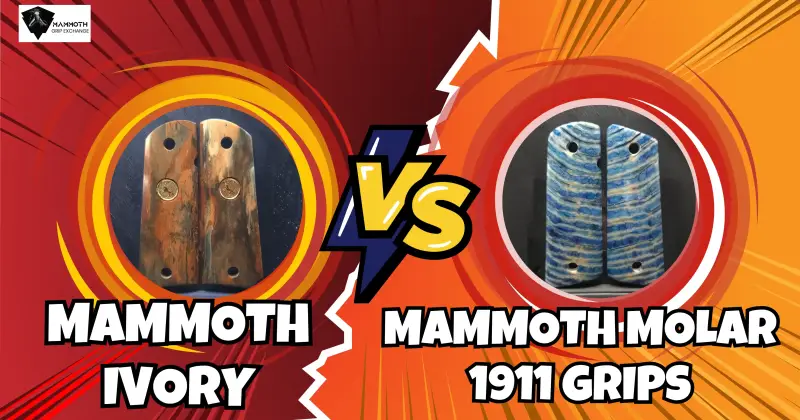
For serious 1911 collectors and custom firearm owners, a grip is more than a functional component—it’s a statement of taste, history, and individuality. Among the most sought-after exotic materials in the world of luxury firearm accessories are mammoth ivory and mammoth molar. Both are prehistoric, legally sourced fossil materials, yet each offers a distinctly different experience in appearance, feel, and collectibility.
If you’re considering upgrading your 1911 with handcrafted grips, understanding the difference between mammoth ivory and mammoth molar will help you make a confident, informed decision.
What Is Mammoth Ivory?
Mammoth ivory comes from the tusks of Woolly Mammoths that roamed the Earth over 10,000 years ago. Preserved in Arctic permafrost, this fossil ivory is legally harvested and widely regarded as an ethical alternative to modern elephant ivory.
Appearance and Characteristics
Mammoth ivory is prized for its smooth texture, creamy tones, and subtle natural grain. Visually, it resembles traditional ivory but often displays unique mineral staining caused by thousands of years underground. Each piece carries natural variation, yet maintains a refined, classic aesthetic.
Why Do Collectors Choose Mammoth Ivory 1911 Grip?
Collectors who appreciate timeless elegance often gravitate toward mammoth ivory 1911 grip. It provides an exceptional surface for fine scrimshaw art and detailed engraving, making it ideal for heirloom 1911 grips that tell a personal or historical story. Its understated beauty appeals to traditionalists who value craftsmanship over flash.
What Is Mammoth Molar?
Mammoth molar is sourced from the fossilized teeth of the mammoth—one of the rarest prehistoric materials used in firearm grips today. Unlike ivory, molar is composed of layered enamel plates, resulting in dramatic natural patterns.
Appearance and Natural Patterning
Mammoth molar1911 grips are immediately recognizable for their bold mosaic textures and striking color contrasts, ranging from earthy browns and golds to blues, blacks, and grays. No two molar grips are ever alike, making each set a true one-of-one piece.
Why Mammoth Molar Is Considered Rarer
Usable mammoth molar is far more limited than ivory, and shaping it requires exceptional skill. For collectors seeking maximum visual impact and rarity, mammoth molar represents the pinnacle of exotic grip materials.
What Is the Difference Between Mammoth Ivory and Mammoth Molar 1911 Grips?
Mammoth ivory 1911 grips are made from fossilized Woolly Mammoth tusks and feature a smooth, classic ivory appearance ideal for scrimshaw and engraving.
Mammoth molar 1911 grips come from fossilized mammoth teeth and display bold, mosaic-like patterns, making them rarer and more visually dramatic.
Mammoth Ivory vs. Mammoth Molar: A Side-by-Side Comparison
Aesthetics
- Mammoth Ivory: Smooth, classic, refined, and traditional
- Mammoth Molar: Bold, artistic, dramatic, and modern
Durability and Performance
When properly stabilized and handcrafted, both materials are equally suitable for functional 1911 firearms. At Mammoth Grip Exchange, every grip is 100% hand-manufactured using proprietary, warp-resistant processes—never CNC-machined—ensuring long-term structural integrity.
Rarity and Collectibility
Mammoth molar is generally rarer and more visually distinctive, while mammoth ivory offers a more traditional collector appeal. Both materials hold significant value as heirloom-level firearm accessories.
Why Craftsmanship Matters More Than the Material
Exotic materials alone do not guarantee quality. Poor curing, rushed machining, or improper finishing can lead to cracking, warping, or premature wear. True artisan grips require patience, expertise, and a deep understanding of how fossil materials behave.
At Mammoth Grip Exchange, every piece is individually hand-shaped, finished, and inspected, preserving the integrity of the material while enhancing both performance and aesthetics. This level of craftsmanship is what transforms rare materials into functional works of art.
Customization, Engraving, and Scrimshaw Potential
Both mammoth ivory and mammoth molar offer exceptional opportunities for personalization.
- Mammoth Ivory is the preferred choice for intricate scrimshaw due to its smooth, consistent surface. Fine line artwork, portraits, and symbolic designs come to life with museum-quality detail.
- Mammoth Molar excels in bold visual presentation, where the natural pattern becomes part of the design itself. Engraving and laser detailing can enhance the organic beauty without overpowering it.
Through collaboration with a world-renowned Hungarian scrimshaw artist, Mammoth Grip Exchange delivers bespoke grips that blend art, history, and personal meaning.
Which Should You Choose?
Choose Mammoth Ivory If You:
- Prefer classic, understated luxury
- Want detailed scrimshaw or engraving
- Value traditional collector aesthetics
Choose Mammoth Molar If You:
- Want a striking, conversation-starting statement
- Appreciate bold, natural patterning
- Seek rare, limited-edition firearm accessories
Legal and Ethical Considerations
Both mammoth ivory and mammoth molar are fossil-based materials, making them legal to own and trade in most parts of the United States. They offer an ethical alternative to modern ivory while preserving prehistoric history in functional art form.
Conclusion
Choosing between mammoth ivory and mammoth molar 1911 grips ultimately comes down to personal taste, aesthetic preference, and how you want your firearm to be remembered. Whether you favor the refined elegance of ivory or the dramatic individuality of molar, both materials represent a commitment to craftsmanship, heritage, and legacy—values that define true collectors.
FAQs Related to Difference Between Mammoth Ivory and Mammoth Molar 1911 Grips
1. Are mammoth ivory and mammoth molar grips legal to own in the United States?
Yes. Mammoth ivory and mammoth molar are fossil materials from extinct animals and are legal to own, buy, and sell in most U.S. states. They are widely considered ethical alternatives to modern ivory, though buyers should always verify local regulations.
2. Which is more valuable: mammoth ivory or mammoth molar 1911 grips?
Value depends on rarity, craftsmanship, and customization. Mammoth molar is generally rarer and often commands higher prices due to its limited supply and unique patterns, while mammoth ivory is highly valued for its classic appearance and suitability for fine scrimshaw.
3. Are mammoth ivory and mammoth molar grips durable enough for regular use?
Yes. When properly stabilized and handcrafted, both materials are extremely durable and suitable for functional 1911 firearms. High-quality artisan grips resist warping and cracking and can be safely used for range or carry firearms.
4. Which material is better for scrimshaw or engraving?
Mammoth ivory is preferred for detailed scrimshaw because of its smooth, consistent surface, which allows for fine line work and intricate artwork. Mammoth molar can also be engraved, but it is better suited for bold designs that complement its natural patterns.
5. Will my mammoth grips look the same as someone else’s?
No. Every set of mammoth ivory or mammoth molar grips is naturally unique. Variations in color, grain, mineral staining, and fossil structure ensure that no two grips are ever identical, making each set a true one-of-one heirloom piece.
Add comment
Comments