

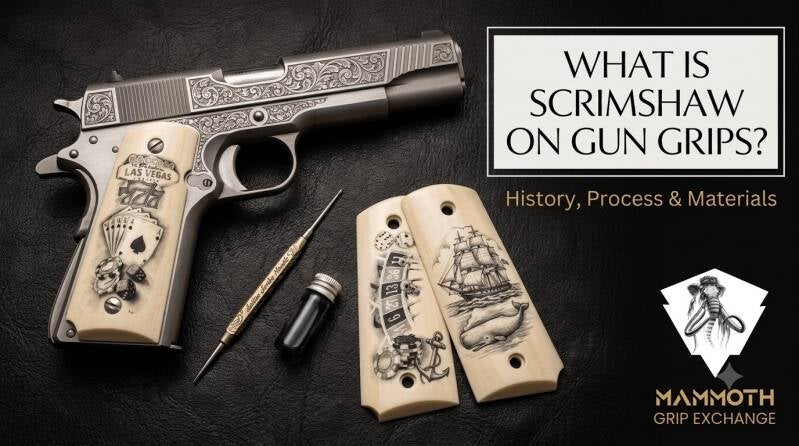
Scrimshaw on gun grips is a hand-engraved art form where fine designs are etched into ivory, bone, or fossil material and filled with ink or pigment to create permanent, detailed imagery. It transforms a functional firearm component into a one-of-a-kind collectible. This guide covers where scrimshaw comes from, how it is applied to gun grips, what materials it works best on, and what buyers should expect when ordering a scrimshawed grip.
What Is Scrimshaw?
Scrimshaw is the art of engraving or incising detailed designs into ivory, bone, or similar dense natural materials, then rubbing ink or pigment into the recessed lines to make the image visible. It produces fine-line artwork with extraordinary detail that cannot be replicated by surface printing or laser etching.
The technique relies entirely on the skill of the artist's hand. Each line is cut individually with a sharp needle or scribe, and the depth, spacing, and direction of those lines determine how light and shadow read across the finished piece. No two scrimshaw pieces are identical. Even the same design executed twice by the same artist will differ in subtle ways.
On gun grips, scrimshaw elevates the material from decorative to genuinely artistic. A scrimshawed ivory or fossil grip is simultaneously a functional firearm component and a permanent work of hand art.
Where Does Scrimshaw Come From?
Scrimshaw originated with American whalers in the late eighteenth and early nineteenth centuries. Sailors on long voyages used the abundant whale bone and sperm whale teeth aboard their ships as a canvas for intricate carvings and engravings, filling idle hours at sea with artwork that documented their lives, voyages, and the natural world around them.
The word "scrimshaw" itself has disputed origins, possibly derived from a sailor's slang term for idle work or light labor. What is clear is that by the early 1800s, scrimshaw had become a recognized folk art tradition specific to the American whaling industry, producing pieces that are now valuable museum artifacts and collectibles.
As whale hunting declined and ivory sourcing shifted to land-based materials, the scrimshaw tradition followed. Artists adapted their techniques to elephant ivory, fossilized walrus tusk, mammoth ivory, and other dense natural materials, all of which accept the scribe equally well and in many cases produce superior results due to their mineral density.
How Is Scrimshaw Applied to Gun Grips?
The process begins with a prepared grip surface that is smoothed, polished, and free of any surface oils that would prevent ink adhesion. The artist transfers a design outline to the surface, then works section by section with a sharp scribe or engraving needle, cutting fine lines into the material at varying depths and densities to build up tonal values.
Once the engraving is complete, ink (typically black India ink, though colored pigments are also used) is rubbed across the entire surface and worked into the cuts. The excess ink is then carefully wiped away from the surface, leaving pigment only in the engraved recesses. The result is a crisp, high-contrast image embedded permanently into the material.
A final polish seals the surface and brings up the natural luster of the grip material, making the scrimshaw design appear to float within the ivory or fossil rather than sitting on top of it. This depth effect is unique to scrimshaw and is one of the primary reasons the technique remains in demand despite modern alternatives.
What Materials Are Best for Scrimshaw Gun Grips?
The ideal scrimshaw surface is dense, fine-grained, and light in base color so that the dark ink provides strong visual contrast. Mammoth ivory is widely regarded as the finest material for scrimshaw gun grips. Its mineral density allows for extremely fine line work, its ivory-cream base color makes black ink pop cleanly, and its natural tonal variation adds dimension to the finished design.
Mammoth molar is another strong candidate, particularly for designs that benefit from the material's natural cellular pattern. The grid-like structure of mammoth molar creates a built-in visual texture that interacts with scrimshaw artwork in ways flat ivory cannot. Experienced artists incorporate the material's pattern into the design rather than working against it.
Fossil bone, whale bone, and antler can also accept scrimshaw, though their surface porosity requires more careful ink application and wipe-down technique. You can explore available scrimshaw gun grips, including designs applied to mammoth ivory and fossil materials, in the available scrimshaw collection.
What Designs Are Commonly Used in Scrimshaw Gun Grips?
Traditional scrimshaw designs drew heavily from maritime imagery: sailing ships, whales, sea charts, and portraits of sailors or their families. On gun grips, the design vocabulary expands to include eagles, American flags, wildlife scenes, western motifs, military insignia, portraits, and custom imagery requested by the buyer.
Wildlife scenes are among the most popular choices for firearm applications. Deer, elk, bison, and birds of prey rendered in fine-line detail on ivory or fossil material create a cohesive natural theme that complements the grip material's own organic origins. Portrait scrimshaw of historical figures, military leaders, or personal subjects represents the most technically demanding category and commands the highest prices from skilled artists.
Custom designs are fully available for buyers who want imagery specific to their firearm, their history, or their interests. The scrimshaw gun grips section at Mammoth Grip Exchange shows the range of design styles and material combinations currently available, from classic maritime imagery to contemporary wildlife art.
How Does Scrimshaw Compare to Engraving on Gun Grips?
Scrimshaw and engraving are related but distinct techniques. Traditional metal engraving removes material to create three-dimensional relief, giving the design physical depth you can feel with your fingertip. Scrimshaw creates visual depth through ink contrast rather than physical relief, so the surface remains essentially flat while the fine-line artwork creates the illusion of dimension through tonal gradation.
On grip materials like ivory and fossil bone, engraving in the metal sense is rarely done because it risks fracturing the material. Scrimshaw's lighter touch, using a sharp needle rather than a cutting graver, is better suited to these natural surfaces and produces finer detail than relief carving allows.
For buyers choosing between engraved metal components and scrimshawed grip panels, the two are complementary rather than competing. Many high-end custom firearms pair professionally engraved metal work on the frame and slide with scrimshawed ivory or fossil grips, a combination that represents the full spectrum of custom firearm artistry.
What Should You Expect When Ordering Scrimshaw Gun Grips?
Custom scrimshaw gun grips are made-to-order pieces that require time, typically several weeks to months depending on design complexity, artist availability, and the grip material chosen. Buyers should expect the process to begin with a design consultation, during which the artist confirms the subject matter, composition, ink color, and any specific reference images the buyer wants incorporated.
The grip material is fitted to the firearm first, then scrimshaw is applied to the finished and polished surface. This sequencing matters because scrimshaw applied before final fitting could be damaged during the fitting process. When the piece is complete, the buyer receives a grip that is precisely fitted to their specific firearm and carries original hand artwork that cannot be duplicated.
Pricing reflects the skill and time involved. Simple single-subject designs on standard ivory start at a meaningful premium over plain grips. Complex multi-subject scenes, portrait work, or designs on rare materials like crosscut mammoth ivory scale significantly higher. The mammoth ivory crosscut grips in particular make extraordinary scrimshaw canvases due to their structural layering, which adds visual complexity beneath the artwork itself.
Does Scrimshaw Affect the Value of Gun Grips?
Yes. Quality scrimshaw by a recognized artist on premium material substantially increases the value of gun grips, both at the time of purchase and over time. The combination of rare material and original hand artwork creates a two-layer collectible value that neither element alone provides.
The artist's reputation matters considerably in the valuation equation. Scrimshaw by well-known artists with documented portfolios commands prices that reflect both the material cost and the artwork's standalone value as signed original work. Lesser-known artists produce beautiful pieces at lower price points, but the long-term appreciation potential is more closely tied to the material than the artist name.
From a pure firearm perspective, scrimshawed grips also enhance the overall presentation value of the pistol they are fitted to. A 1911 fitted with hand-scrimshawed mammoth ivory grips is a fundamentally different collectible than the same pistol with plain factory grips. The transformation is not cosmetic but categorical. You can see a striking example of this in the Las Vegas themed hand-scrimshawed 1911 Officer-sized grips.
How Do You Care for Scrimshawed Gun Grips?
Scrimshawed grips require the same basic care as any ivory or fossil material grip: gentle cleaning, light conditioning, and protection from direct sunlight. The additional consideration with scrimshaw is protecting the ink in the engraved lines from harsh solvents or abrasive cleaning materials that can draw pigment out of the cuts.
Clean scrimshawed surfaces with a soft cloth slightly dampened with clean water, or with a very mild soap solution applied gently and rinsed quickly. Never use alcohol, acetone, or petroleum-based solvents directly on scrimshawed surfaces, as these will dissolve or bleach the ink and permanently damage the artwork.
For conditioning, apply a minimal amount of Renaissance Wax or similar museum-grade preservation wax to protect both the surface material and the ink. Avoid oils that penetrate deeply into the material, as they can migrate into the engraved lines and alter the ink color over time. Full ivory and fossil care guidance applies, and the ivory care page covers the fundamentals of protecting these materials across all conditions.
Is a Scrimshaw Gun Grip Worth It?
The Short Answer
Yes. For collectors, enthusiasts, and buyers who want a firearm accessory that is genuinely one of a kind, scrimshaw gun grips represent one of the most compelling investments available in the custom grip market.
When Scrimshaw Is the Right Choice
Scrimshaw suits buyers who want original hand artwork on their firearm, who value the intersection of craft traditions, and who are building a collection where provenance and uniqueness matter. It also suits buyers who want to commission something personal: a portrait, a meaningful scene, or imagery tied to their own history.
When to Consider Plain Grips Instead
If your primary priority is the beauty of the raw material itself, a plain polished grip lets the material speak without competition. Many collectors own both: plain grips for daily appreciation of the material, and scrimshaw grips as display and presentation pieces. The full range of mammoth ivory grips and mammoth molar grips shows the full spectrum from raw material beauty to artistic embellishment.
The Verdict
Scrimshaw on gun grips is the point where firearm customization meets fine art. It carries a tradition stretching back two centuries, requires genuine skill that cannot be automated, and produces pieces that are categorically irreplaceable. For the collector who wants their firearm to carry a story, visually, historically, and artistically, scrimshaw is the answer.
Browse the complete available scrimshaw grip inventory and explore how scrimshaw fits within the broader world of custom gun grips at Mammoth Grip Exchange.
Add comment
Comments