

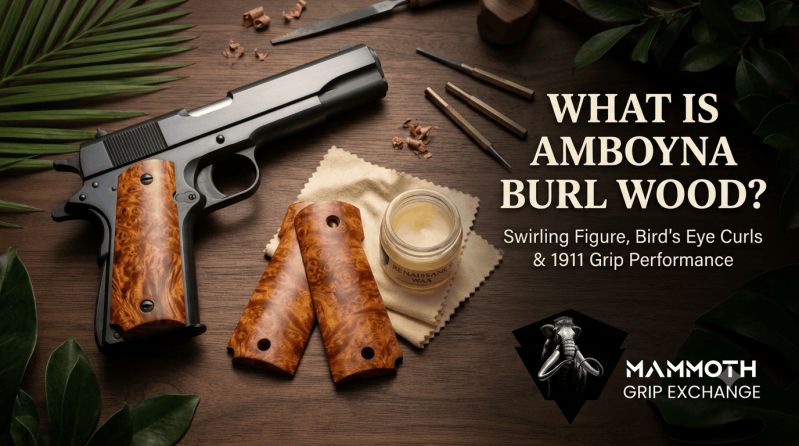
Amboyna burl is a rare, highly figured wood cut from the burls of Pterocarpus trees in Southeast Asia. It is prized for its golden to reddish-brown color, swirling grain, and sparkling "bird's eye" curls that no two pieces share. On gun grips, it delivers dramatic natural beauty at a price well below fossil materials. This guide explains what amboyna burl is, where it comes from, why it looks the way it does, and what to know before buying.
What Is Amboyna Burl Wood?
Amboyna burl is the figured growth taken from the amboyna tree, Pterocarpus indicus. The tree itself is a tropical hardwood. The "burl" is the unusual, knotted growth that forms on its trunk or roots.
The wood is named after Ambon Island in Indonesia, a historic hub of the spice trade. European traders prized the figured wood for furniture, boxes, and decorative inlay centuries ago.
Today it is still valued by furniture makers, luthiers, and knife and grip makers. The same qualities that made it a luxury material then make it a collector favorite now.
Where Does Amboyna Burl Come From?
Amboyna grows across Southeast Asia, including the Philippines, Indonesia, Malaysia, and Papua New Guinea. In the Philippines it is known as narra and is the national tree.
Because burl growth is unpredictable, not every tree produces one. Only a small share of harvested trees yield burl material suitable for fine woodworking. That scarcity is a major part of the wood's value.
Sourcing matters. Responsible suppliers use burl from legal, documented harvests. If you are buying, it is reasonable to ask a seller where their wood comes from.
How Does a Burl Form?
A burl is a tree's response to stress. Injury, insects, fungus, or a virus can trigger abnormal growth, and the tree forms a dense, rounded mass of tangled grain.
Normal wood grain runs in straight, predictable lines. Inside a burl, the grain twists in every direction, creating swirls, eyes, and curls. This is where the shimmering patterns come from.
The result is a wood with a three-dimensional look. As you tilt a finished grip under light, the figure appears to move and shift.
Why Is Amboyna Burl So Visually Striking?
The color is the first thing most people notice. Amboyna ranges from golden honey to warm orange to deep reddish brown, and a single piece often shows several tones.
The figure is the second. Look for these natural features:
- Bird's eye: small, round dark spots that look like tiny eyes in the grain.
- Curl and swirl: rippling, wave-like patterns that catch the light.
- Color contrast: darker streaks and pockets against lighter background tones.
Amboyna also has a pleasant, slightly rose-like scent when freshly cut. Combined with its deep luster when polished, it is easy to see why it stands out among exotic woods.
How Does Amboyna Burl Perform as a Grip Material?
Amboyna is a moderately hard wood. It is tougher than most common domestic woods, but not as extreme as ironwood or ebony.
That balance works well for grips. It machines cleanly, takes a fine polish, and feels smooth and warm in the hand. It also absorbs a little vibration under recoil, which many shooters like.
For carry and range pistols, it holds up well when properly finished. For safe queens and display builds, it is outstanding.
Why Is Amboyna Burl Usually Stabilized?
Burl grain runs in many directions, which makes the wood more prone to movement and cracking than straight-grained lumber. To solve this, makers often stabilize burl before cutting grips.
Stabilization means impregnating the wood with a clear resin under vacuum and pressure, then curing it. The resin fills the tiny spaces inside the wood and locks the structure in place.
The result is a grip that resists swelling, shrinking, and warping, while keeping the natural figure fully visible. Stabilized amboyna is generally the better choice for any pistol that will be handled regularly.
What Should You Look for When Buying Amboyna Burl Grips?
Quality varies widely, so it helps to know what to check. These points separate excellent sets from average ones.
- Figure and depth: strong, clearly defined curls and eyes that look three-dimensional.
- Matching panels: left and right sides should look like a coordinated pair.
- Even finish: a smooth, glass-like polish with no dull patches or rough spots.
- Tight fit: clean edges and accurate screw holes that sit flush on the frame.
- Stabilization: ask whether the wood has been stabilized, especially for working pistols.
Photos taken under natural or directional light show the figure most honestly. If a listing only uses flat, diffused photos, ask for more.
What Do Amboyna Burl Grips Look Like on a Finished 1911?
Seeing finished sets helps more than any description. The warm tones look especially good against blued steel, where the gold and red contrast sharply with the dark metal.
For a figure-heavy look, the amboyna burlwood 506 grips show how bold the curl can get. For a slightly calmer pattern, the classic amboyna burl 509 grips offer a more traditional, understated look.
If you like unusual grain layouts, the crotched amboyna 446 grips show a flowing, feathered pattern that comes from cutting near a branch junction.
How Does Amboyna Compare to Other Exotic Woods?
Amboyna is not the hardest wood, and it is not the cheapest. Its strength is visual impact. Dense woods like ironwood and ebony win on toughness, while rosewood wins on a smooth, oily feel.
Many collectors choose amboyna when they want the grip to be the focal point of the pistol. It is one of the few woods that can compete with fossil materials for sheer eye appeal, at a much lower cost.
To compare all the main options, the full exotic wood grip collection is the best place to browse.
How Do You Care for Amboyna Burl Grips?
Care is simple. Wipe the grips with a soft, dry cloth after handling to remove skin oils and dust.
Apply a thin coat of quality wax two or three times a year to protect the polish. Avoid harsh solvents, heavy oils, and long exposure to moisture.
Keep the pistol out of direct sunlight, since UV light can slowly fade the warm tones. Store it somewhere with stable temperature and humidity for the best long-term results.
Is Amboyna Burl Worth It for Gun Grips?
The Short Answer
Yes. For buyers who want a grip that looks truly special without paying fossil prices, amboyna burl is one of the best values in exotic wood.
When Amboyna Is the Right Choice
Choose amboyna if you want maximum visual impact, a warm and comfortable feel, and a one-of-a-kind pattern. It suits showpiece builds, carry pistols with style, and collectors who love figured wood.
When to Consider Something Else
If you need the hardest possible grip for heavy daily abuse, a denser wood may suit you better. If rarity and prehistoric provenance are the goal, fossil materials are the next step up. The guide to the best materials for gun grips helps you weigh these options.
The Verdict
Amboyna burl earns its reputation. It combines rare natural figure, warm color, and comfortable handling in a material that is attainable for most collectors. If you want your 1911 to turn heads, it is hard to find a better wood.
Browse the full range of custom gun grips at Mammoth Grip Exchange to find the amboyna set that fits your pistol.
Frequently Asked Questions
What is amboyna burl wood?
It is figured wood from the burls of the amboyna tree, known for golden to reddish tones and swirling, bird's eye grain.
Is amboyna burl durable enough for gun grips?
Yes. It is moderately hard, and stabilized sets hold up well to regular handling.
Why is amboyna burl stabilized?
Stabilization locks the twisting grain in place, preventing swelling, shrinking, and cracking.
Is amboyna burl expensive?
It costs more than plain woods but far less than fossil materials like mammoth ivory.
Does every amboyna grip look different?
Yes. Burl grain is unpredictable, so every set has its own unique pattern and color.
Add comment
Comments