

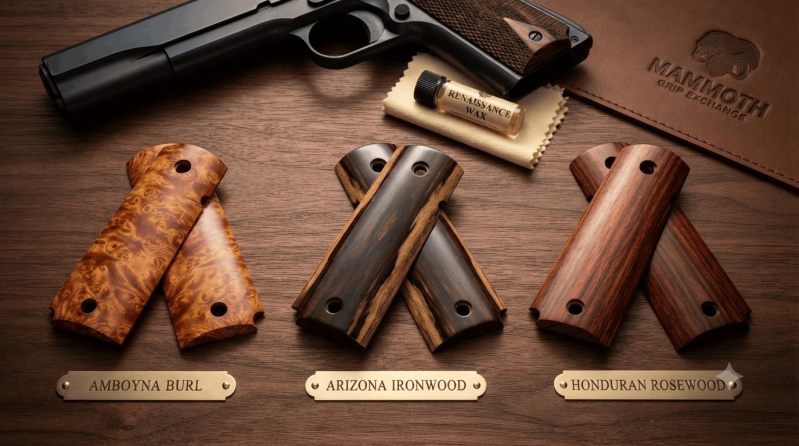
Amboyna burl, Arizona desert ironwood, and Honduran rosewood are three of the best exotic woods for 1911 gun grips, and each excels in a different way. Amboyna offers the most dramatic figure, ironwood offers the greatest hardness and durability, and rosewood offers warmth and a classic feel in the hand. This guide compares all three on appearance, durability, feel, maintenance, and value so you can choose the right wood for your pistol.
Why Choose Exotic Wood for 1911 Grips?
Exotic wood sits in a sweet spot between factory grips and rare fossil materials. It adds real beauty and natural character without the price of mammoth ivory or the care demands of fossil materials.
Wood also feels better in the hand than many alternatives. It is warm to the touch, it grips skin naturally, and it absorbs a little vibration under recoil. These qualities make exotic wood a practical choice for pistols that are actually shot and carried.
Every set of exotic wood grips is unique. Grain, color, and figure vary from one piece to the next, so your pistol ends up with grips that no one else has. You can see the full range of species in the exotic wood grip collection.
What Makes a Wood Good for Gun Grips?
Four qualities separate a great grip wood from an average one. Knowing them makes the comparison below easier to follow.
- Density and hardness: harder woods resist dents, scratches, and wear from handling.
- Stability: the wood should resist swelling, shrinking, and warping with humidity changes.
- Grain and figure: tight, interesting grain gives the grip visual depth.
- Workability: the wood must machine cleanly to the tight tolerances a 1911 frame demands.
No wood scores perfectly in all four. The best choice depends on which qualities matter most to you.
What Is Amboyna Burl and Why Is It Popular?
Amboyna burl comes from the Pterocarpus tree family in Southeast Asia. A burl is a growth deformity in the tree, and it produces the swirling, eye-catching figure that makes amboyna so popular with grip makers and collectors.
The color ranges from golden honey to deep reddish brown, often with small dark "bird's eye" curls scattered through the grain. Under direct light, the figure appears to shimmer and shift as you move the pistol.
Amboyna is moderately hard, so it is a good choice for carry and range pistols, though it is not as hard as ironwood. Because burl grain runs in many directions, makers usually stabilize it to keep it strong and dimensionally steady. The collection includes several options, such as the amboyna 446 grips and the fanned amboyna burl 414 grips, which show how much the figure can vary between sets.
What Is Arizona Desert Ironwood and How Does It Perform?
Arizona desert ironwood grows slowly in the Sonoran Desert, and that slow growth produces some of the densest wood in North America. It is far harder than most exotic species, which makes it extremely resistant to dents, scratches, and daily wear.
The look is bold. Dark chocolate brown heartwood is streaked with lighter tan sapwood, creating strong contrast and a rugged, natural pattern. It polishes to a deep, glass-like shine and holds that finish for years.
The trade-off is workability. Ironwood is tough on tooling, so well-fitted sets reflect real craftsmanship. If you want a grip that will outlast the pistol, ironwood is hard to beat. The Arizona desert ironwood 234 grips are a good example of how striking this wood looks on a finished 1911.
What Is Honduran Rosewood and How Does It Feel?
Honduran rosewood is prized for its rich, warm color and smooth feel. The tone runs from reddish brown to deep purple-brown, usually with darker streaks that give the grain a flowing, elegant look.
It is a naturally oily wood, which gives it a satiny, almost silky feel in the hand. Many shooters find it one of the most comfortable grip woods because it feels warm and polished rather than slick or cold.
Rosewood is hard and stable, though not as extreme as ironwood. It also tends to look more refined than rugged, which suits classic blued and case-hardened 1911s well. See it in the Honduran rosewood 378 grips, or choose a more figured option like the Honduran rosewood burl 357 grips.
How Do Amboyna, Ironwood, and Rosewood Compare Side by Side?
| Feature | Amboyna Burl | Arizona Desert Ironwood | Honduran Rosewood |
|---|---|---|---|
| Appearance | Golden to reddish brown, swirling burl figure | Dark brown with tan contrast streaks | Reddish to purple brown, flowing grain |
| Hardness | Moderate | Extremely high | High |
| Feel in hand | Smooth, light | Dense, solid | Warm, satiny |
| Best for | Visual impact | Heavy use and durability | Comfort and classic looks |
| Maintenance | Light conditioning | Very low | Low, occasional wax |
In short, amboyna wins on beauty, ironwood wins on toughness, and rosewood wins on comfort. Your priorities decide the winner.
Which Wood Looks Best on Which 1911 Finish?
Matching the wood to the pistol's finish makes the whole package look intentional. The right pairing can lift a good 1911 into a showpiece.
Blued steel pairs beautifully with warm woods like amboyna and rosewood. The golden and reddish tones contrast sharply with the deep blue-black metal. Stainless and two-tone pistols look excellent with ironwood, where the dark wood and light streaks echo the metal's contrast.
If you want something between classic and bold, a figured wood such as the amboyna burl 370 grips works on almost any finish. When in doubt, choose a wood that echoes one of the pistol's existing colors.
How Do You Care for Exotic Wood Grips?
Exotic wood grips are low maintenance, but a little care keeps them looking sharp. Wipe them with a soft, dry cloth after handling to remove skin oils and dust.
Apply a thin coat of quality wax or a light conditioner two to three times a year. Avoid heavy oils, harsh solvents, and prolonged moisture, which can dull the finish or affect stability.
Also keep the pistol out of direct sunlight and away from heat, since UV light can fade the richest colors over time. For a full routine, these maintenance tips for exotic wood and fossil grips cover everything in more detail.
Are There Legal or Sourcing Points to Know About?
Some rosewood species fall under international trade rules for protected timber. These rules mainly affect cross-border shipping, but they are a good reason to buy from a reputable seller who understands sourcing.
Arizona desert ironwood is also regulated at the source, and legal material usually comes from fallen or permitted wood. Ask the seller where the wood came from and whether paperwork is available. A trustworthy dealer will answer without hesitation.
How Does Exotic Wood Compare to Fossil Grip Materials?
Exotic wood is warmer, lighter, and more forgiving than fossil materials, and it costs less. Fossil materials like mammoth ivory and mammoth molar offer rarity and prehistoric provenance that wood cannot match.
Many collectors own both: wood for pistols they carry and shoot, and fossil grips for display pieces. If you are weighing the two directions, this comparison of mammoth ivory versus exotic wood grips explains how to decide.
Which Exotic Wood Is Right for Your 1911?
The Short Answer
Choose amboyna for the most striking figure, ironwood for maximum durability, and rosewood for comfort and a classic look. All three are excellent, and none is a wrong choice.
When Amboyna Is the Best Pick
Pick amboyna if you want visual impact and a grip that stands out in photos and in person. It suits showpiece builds and collectors who love figured wood.
When Ironwood or Rosewood Is the Better Pick
Pick ironwood if your 1911 sees daily carry or heavy range use and you want a grip that will not show wear. Pick rosewood if comfort and a refined, traditional look matter most to you.
The Verdict
The best exotic wood is the one that fits how you use your pistol and how you want it to look. Amboyna, ironwood, and rosewood each reward a thoughtful buyer, and each gives your 1911 a character that factory grips cannot. For more help narrowing the field, this buyer's guide to choosing the right 1911 grip material is a useful next read.
Browse the full range of custom gun grips at Mammoth Grip Exchange to find the wood, finish, and figure that suit your pistol.
Frequently Asked Questions
What is the hardest wood for 1911 grips?
Arizona desert ironwood is among the hardest, making it extremely resistant to dents and daily wear.
Is amboyna burl good for carry pistols?
Yes. It is moderately hard, and stabilized amboyna holds up well to regular carry and range use.
Does rosewood feel better than other woods?
Many shooters think so. Its natural oils give it a warm, satiny feel in the hand.
Do exotic wood grips need much maintenance?
No. Wipe them clean and apply a light wax two or three times a year.
Will exotic wood grips fit any 1911?
Most fit standard Government-size frames, but confirm your frame size and screw spacing before ordering.
Add comment
Comments